When Sellers Have Second Thoughts


By Dennis R. Riccio, President, Central Arizona Association of Realtors
CAAR members gathered at The Golf Club Chaparral Pines for a legislative and advocacy update from Arizona REALTORS® representatives Tim Beaubien and Matthew Deike.
Our May CAAR Business Breakfast at The Golf Club Chaparral Pines was a timely reminder that REALTOR® advocacy is not an abstract idea. It affects the taxes our clients pay, the homes that can be built, the property rights we defend, the insurance challenges facing our communities, and the ability of REALTORS® to do business in Arizona.
We were pleased to welcome Tim Beaubien, Senior Director of Government Affairs for Arizona REALTORS®, and Matthew Deike, REALTOR® Party Manager for Arizona REALTORS®. Together, they gave CAAR members a practical update on what is happening at the Arizona Capitol, how Arizona REALTORS® is working to protect private property rights, and why RAPAC remains one of the most important tools REALTORS® have for making sure our voice is heard.
For those who attended, the message was clear: what happens in Phoenix does not stay in Phoenix. Legislative decisions affect our clients, our businesses, and our communities here in Central Arizona.
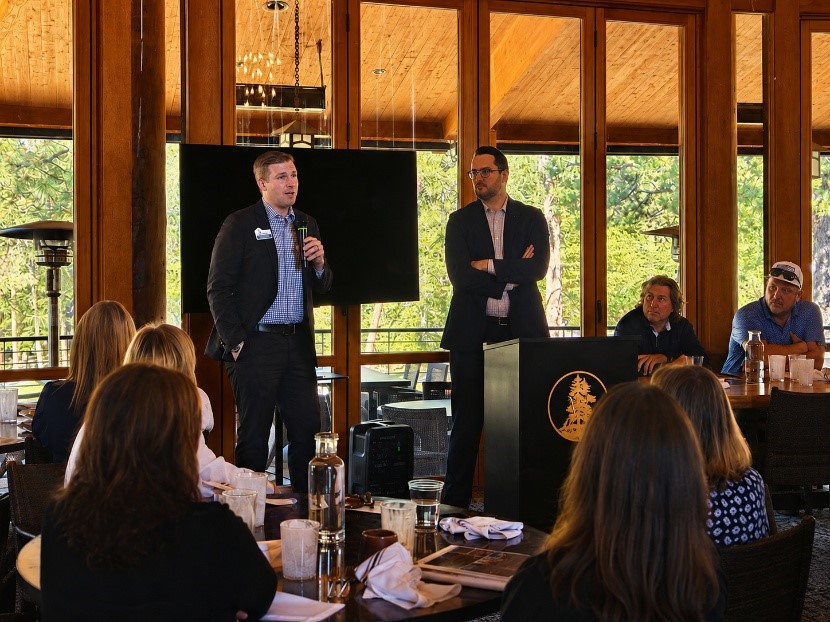
Tim began by explaining his role as Arizona REALTORS®’ in-house lobbyist and our voice at the State Capitol. He noted that the Legislature is deep into the session and working toward a state budget, while Arizona REALTORS® has been reviewing and taking positions on many bills affecting the real estate industry.
One of the strongest pieces of news Tim shared was that every bill Arizona REALTORS® opposed this session was already officially dead. Those defeated proposals included statewide rent control, source-of-income requirements, eviction moratorium proposals, just-cause eviction restrictions, and broad limitations on short-term rentals.
Tim explained that these types of policies can have serious consequences. In other states, similar policies have discouraged housing development, reduced supply, and created a more difficult environment for property owners, housing providers, and real estate professionals. Arizona REALTORS® worked to ensure those policies did not move forward here.
Short-term rentals were one example where Tim emphasized balance. Arizona REALTORS® continues to defend private property rights and opposes broad attempts to cap or ban short-term rentals. At the same time, the association recognizes that nuisance properties and bad actors can create real problems for neighborhoods. Tim explained that Arizona REALTORS® supported a proposal that would have addressed some of those concerns through more targeted regulation, including occupancy limitations and stronger enforcement tools for repeat violators. That bill did not move forward this session, but Arizona REALTORS® remains willing to work on common-sense solutions that address nuisance behavior without undermining homeowners’ property rights.
Tim also discussed one of the most important legislative wins of the year: a new deed fraud law. Deed fraud has become a growing concern in Arizona and across the country. Tim explained that the new law increases deed fraud from a misdemeanor to a felony, which is an important step given the seriousness of criminals attempting to steal what is often a person’s most valuable asset.
The law also strengthens identity protections in real estate transactions and creates a more effective title alert system. Tim explained that some existing county systems notify homeowners only after a title transfer has already occurred, which may be too late to prevent the damage. The new approach is designed to provide earlier alerts when suspicious changes are requested, such as changes to mailing addresses or other property-related information.
Arizona REALTORS® also worked to make sure remote online notarization remained protected. Remote online notarization became especially important during COVID and remains valuable in many Arizona transactions. Tim explained that Arizona REALTORS® worked with the bill sponsor and general counsel to draft language that preserved remote online notarization while still improving fraud protections.
Housing supply and homeownership opportunity were another major focus. Tim emphasized that Arizona needs smart growth, not one-size-fits-all growth. The housing needs of Payson are different from the needs of Phoenix, Tucson, Yuma, Flagstaff, the White Mountains, Bullhead City, and other communities across the state. But across Arizona, the need for more attainable housing is real.
Tim discussed several policy ideas Arizona REALTORS® is supporting, including streamlining local permitting and planning processes, allowing third-party design guideline reviews, expediting workforce housing projects, and reforming construction defect laws to encourage more entry-level housing. He specifically noted the need for more “missing middle” housing, such as condominiums, townhomes, bungalow-style homes, and starter homes.
This is especially important because homeownership is becoming harder for many first-time buyers. Tim referenced the fact that the average age of a first-time homebuyer has risen significantly. If Arizona does not address supply, affordability, and entry-level ownership opportunities, that problem will only grow.
“What happens in Phoenix does not stay in Phoenix. Legislative decisions affect our clients, our businesses, and our communities here in Central Arizona.”
For CAAR members, one of the most relevant topics was insurance. Tim acknowledged that insurance affordability and availability are major concerns in Payson and throughout northern Arizona. Rising premiums, underwriting restrictions, and refusals to insure some properties are issues our members and clients are seeing in real time.
Tim was candid that there is no easy solution. He noted that overregulating the insurance industry can cause carriers to pull back from the market, which can make the problem worse. Instead, Arizona REALTORS® is looking for ways to work collaboratively with the insurance industry, improve mitigation, increase transparency, and better understand the data models carriers use to determine premiums and coverage decisions.
He also discussed wildfire-related issues, including legislation passed last year to hold utility providers more accountable for infrastructure that could contribute to wildfire risk. For our area, where wildfire risk and insurance availability are closely connected, this is an issue CAAR will continue to watch closely.
This topic will also remain a priority for CAAR. At the breakfast, I shared that we are working on a future program focused on fire insurance, including possible participation from the fire department and insurance-related speakers who can address fire-hardening, insurance metrics, and practical steps property owners may be able to take to improve insurability.
Matthew Deike explained RAPAC and why it matters to REALTORS®. He described RAPAC as a form of insurance for our business, our agents, and the real estate profession. His point was simple: just as we insure our homes, vehicles, and businesses against risk, RAPAC helps protect the real estate profession from harmful policy decisions by helping elect candidates who understand REALTOR® issues.
Matt explained that Arizona REALTORS® interviews candidates running for the State Legislature and talks with them about issues that affect REALTORS® every day, including housing growth, private property rights, and access to homeownership. The goal is to identify candidates who understand real estate before they are elected.
He also emphasized that RAPAC contributions support candidates who understand real estate and the issues REALTORS® face. He connected RAPAC directly to past policy outcomes, including defeating proposed taxes on commissions and protecting against real estate transfer taxes.
One of Matt’s clearest messages was that REALTORS® are affected by politics whether we like it or not. City councils, county boards, state legislators, and other public officials make decisions that can directly affect our businesses, our clients, and our communities. RAPAC exists so REALTORS® have a seat at the table.
Matt also added a personal note as a first-time homebuyer, thanking REALTORS® for the work they do guiding buyers through a stressful and important process.
“If REALTORS® are not at the table, decisions affecting our clients and businesses may be made without us.” - Matthew Deike
RAPAC in Plain English
Voluntary
Not funded by dues
Supports REALTOR® champions
Helps protect property rights
Gives REALTORS® a seat at the table
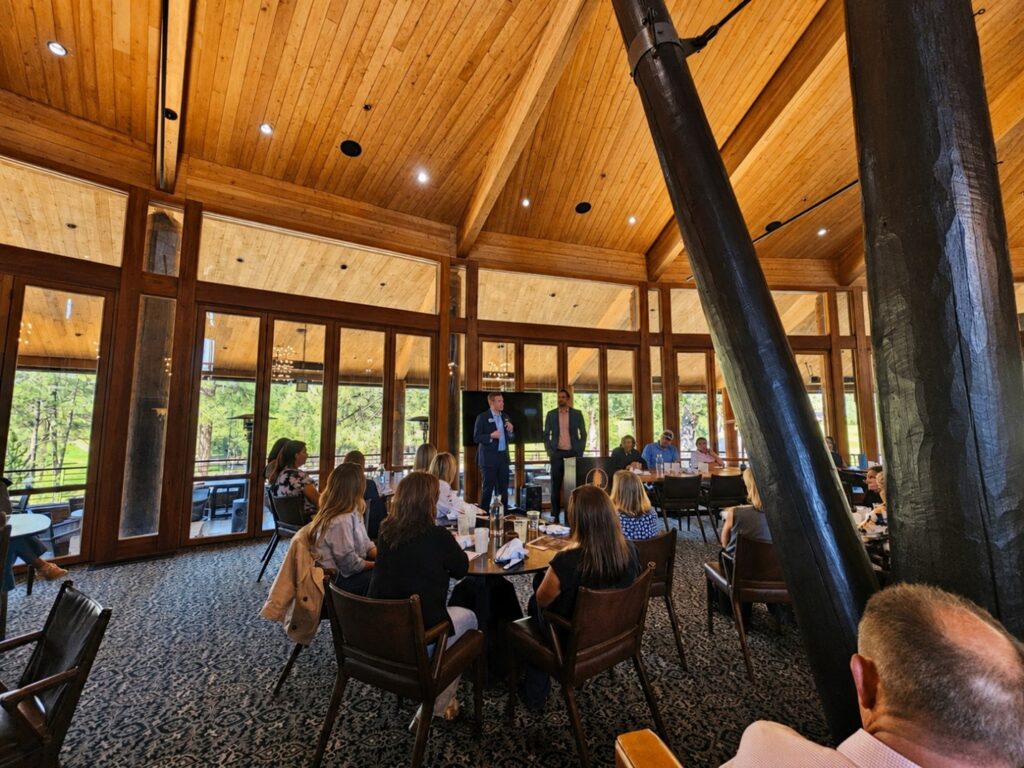
CAAR members asked questions about water, housing supply, rural development, local control, and issues affecting Payson, Pine, Strawberry, and the White Mountains.
The question-and-answer portion of the breakfast was especially valuable because CAAR members raised issues that directly affect Central Arizona.
Members asked about the balance between state and local control, especially when it comes to housing supply, development, and affordability. Tim emphasized that balance is the right word. Arizona REALTORS® does not support forcing one-size-fits-all solutions onto local communities, but the association does support targeted reforms that help address barriers to housing supply.
Tim discussed how understaffed planning departments, excessive design requirements, unrealistic timelines, and high development fees can discourage the type of entry-level and workforce housing Arizona needs. He emphasized the importance of policies that allow communities to grow responsibly while still respecting local needs.
Water was another major topic. Tim discussed the broader Colorado River negotiations and the need for Arizona to protect its fair share of water. He explained that the current agreement governing Colorado River water is expiring, and that Arizona is part of ongoing negotiations involving both upper and lower basin states. He also noted that Arizona has prepared for possible litigation if necessary to protect the state’s water interests.
For Central Arizona, the takeaway is that water policy and housing policy are connected. Smart growth requires responsible water planning. REALTORS® need to be informed about those issues because they affect development, affordability, property values, and long-term confidence in our communities.
Members also asked about rural Arizona, including Payson, Pine, Strawberry, the White Mountains, and surrounding areas. Tim noted that one major challenge in rural communities is the lack of available construction workforce, crews, supplies, and resources needed to build housing. Arizona REALTORS® supported proposals that would help rural counties attract construction labor, create housing tax credits, and make it easier for qualified out-of-state contractors to work on Arizona projects when appropriate.
That issue is very real for our region. Housing supply is not just a Valley problem. Rural communities also need attainable housing for workers, families, retirees, and local businesses.
Another question involved the use of public land for housing. Tim explained that this issue is often misunderstood. The goal is not to develop protected lands or sensitive natural areas. Rather, the discussion involves underutilized, blighted, or vacant public land in appropriate locations that could be used for housing. A revived proposal would allow cities, counties, and in some cases the state to sell public land below market value if it is deed-restricted for housing.
For CAAR members, these discussions reinforced an important point: Central Arizona needs to be part of the statewide conversation. The challenges facing our area are not identical to those in Phoenix or Tucson, and our members can help make sure rural and mountain communities are heard.
In addition to the Arizona REALTORS® advocacy update, CAAR members also received several local association and MLS updates.
CAAR is working on a future Business Breakfast focused on fire insurance and property insurability. Given the concerns facing homeowners in our area, this will be an important topic for both members and clients.
Josh Weinland, our MLS Chair, reviewed several MLS changes, including:
Members should pay particular attention to the Coming Soon rules. Coming Soon means the property is not to be shown during that period. Once a showing occurs, the listing must go active.
These updates are designed to improve accuracy, fairness, and transparency in the MLS.
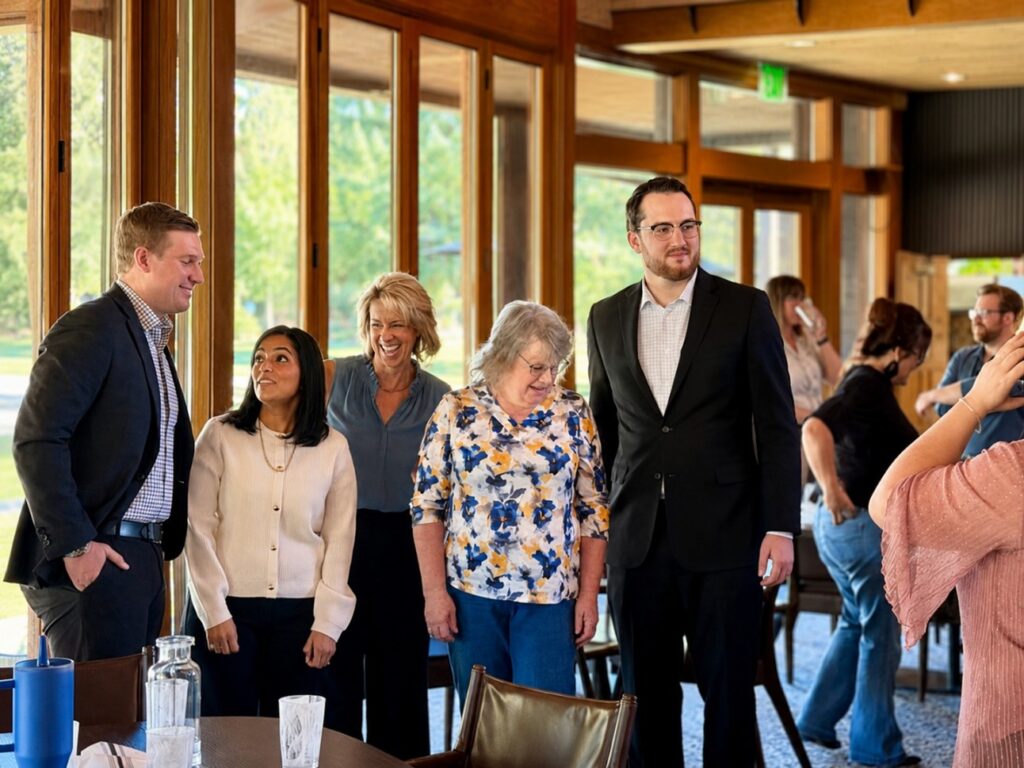
Members continued the conversation with Tim and Matt after the presentation, reinforcing the value of direct engagement between local REALTORS® and Arizona REALTORS® advocacy staff.
My biggest takeaway from the breakfast is that advocacy works best when REALTORS® are informed, engaged, and involved early.
Many of the issues Tim and Matt discussed affect Central Arizona directly: insurance, wildfire risk, water, housing supply, short-term rentals, rural construction challenges, deed fraud, private property rights, and homeownership opportunity. These are not abstract policy topics. They affect the people we serve and the communities where we live and work.
I also appreciated the reminder that Arizona REALTORS® is a member-driven organization. Tim encouraged members to participate in the Arizona REALTORS® caucus and to communicate local concerns to the state association. That matters. If REALTORS® in communities like ours do not share what we are seeing, the statewide advocacy team cannot fully understand our priorities.
CAAR members have an important voice. We know the challenges facing Payson, Pine, Strawberry, the Rim Country, and Central Arizona. We understand the concerns of local homeowners, buyers, sellers, property managers, investors, and small businesses. Our perspective needs to be part of the conversation.
I want to thank Tim Beaubien and Matthew Deike for traveling to Payson and for giving CAAR members such a thoughtful and useful update. I also want to thank our members for attending, asking strong questions, and staying engaged in the issues that shape our profession.
As REALTORS®, we do more than help people buy and sell property. We help protect private property rights, support homeownership, and strengthen the communities we serve. Our voice matters, and meetings like this help ensure that Central Arizona remains part of the statewide conversation.
Attend future CAAR breakfasts.
Watch for Arizona REALTORS® calls for action.
Share local issues with CAAR leadership.
Participate in state association advocacy opportunities.
Stay informed on insurance, water, housing, and private property rights.
Interested in what CAAR does and how you can get involved? Contact us below to talk to our team.