When Sellers Have Second Thoughts

By Dennis R. Riccio, President, Central Arizona Association of Realtors
As REALTORS® and brokers in Rim Country, we do more than help people buy and sell property. We help clients understand the realities of owning property in our communities. In Central Arizona, one of those realities is wildfire preparedness.
This issue is not theoretical. It is pine needles in gutters, wood decks attached to homes, firewood stacked too close to exterior walls, dry vegetation near foundations, and buyers asking whether they can obtain affordable insurance before they remove contingencies.
That is why one distinction deserves more attention:
Firewise is the community strategy. It is about neighbors, HOAs, local fire departments, emergency managers, and public agencies working together to reduce wildfire risk. It includes education, defensible space, vegetation management, action plans, cleanup efforts, and ongoing neighborhood participation.
Fire hardening, sometimes called home hardening, is the structure strategy. It asks a different question:
A Firewise community is a strong positive, but it does not automatically mean each individual home has been hardened. A clean yard helps, but a vulnerable house can still ignite. Creating defensible space around a home is only part of the equation. The home itself must also be made harder to ignite.
In Payson, Pine, Strawberry, Star Valley, Christopher Creek, Tonto Basin, and throughout Rim Country, many properties sit among ponderosa pine, juniper, manzanita, scrub oak, wood decks, older roofs, steep terrain, and seasonal vegetation. Many are second homes or seasonal homes, where maintenance may not happen as regularly as it should.
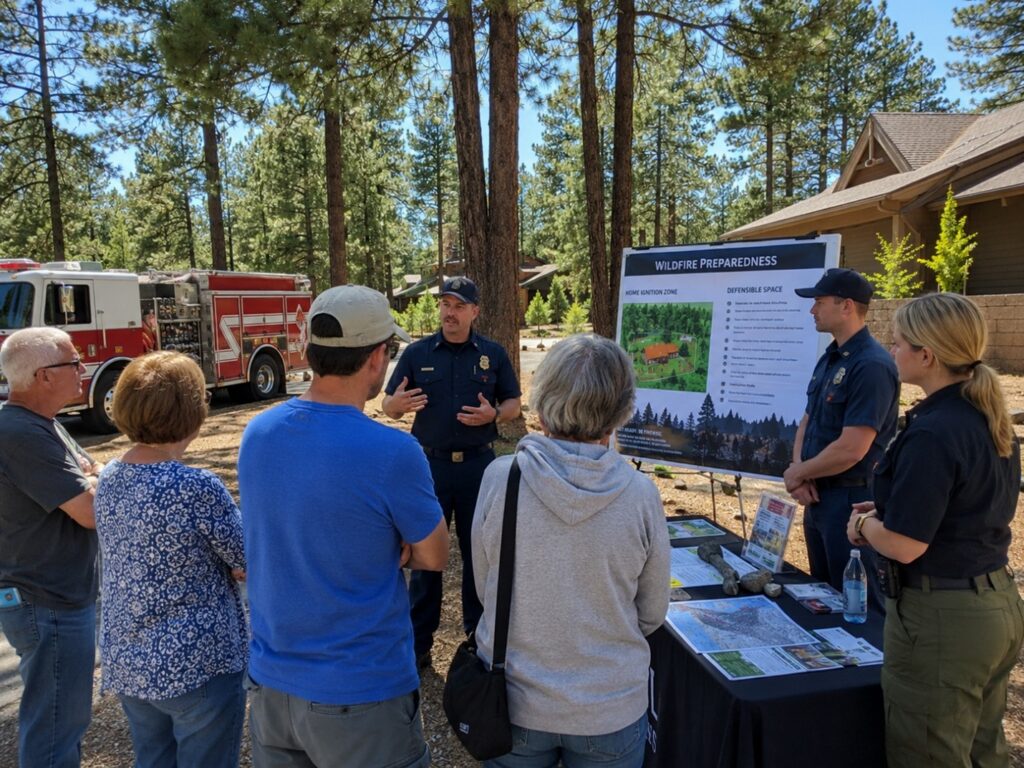
Local fire departments and community partners play an important role in wildfire preparedness education.
Our local fire departments, including Payson Fire and neighboring agencies, have been working to educate residents about wildfire preparedness, defensible space, and the growing importance of home hardening. CAAR members should be familiar with that message because it increasingly intersects with real estate, insurance, and client expectations.
The research prepared for this article noted that the Payson Fire Department publishes wildfire and Firewise information, offers hazard-check resources, and identifies fire inspection and public education programs. It also noted that Gila County Emergency Management maintains ReadyGila alerts and wildfire planning resources, while the Tonto National Forest provides regional fire information and prescribed-burn updates.
That local framework matters. Wildfire readiness is no longer just a fire-service issue. It is part of homeownership, marketability, risk management, and transaction planning.
Firewise Organizes the Neighborhood. Fire Hardening Protects the House.
The easiest way to explain the distinction is this:
Firewise is a community commitment. Fire hardening is a structure commitment.
Firewise | Fire Hardening |
Community strategy | Structure strategy |
Neighborhood cleanup | Roofs, vents, gutters, decks |
Defensible space | Ember-resistant features |
Shared risk reduction | House-by-house protection |
Organizes the neighborhood | Protects the structure |
Firewise looks at the shared environment: neighborhoods, vegetation, road access, common areas, defensible space, evacuation awareness, and resident participation. It helps communities organize and maintain a culture of preparedness.
Fire hardening looks at the individual structure: roof, vents, gutters, windows, eaves, decks, siding, fencing, garage doors, and the first few feet around the house. It focuses on reducing the ways embers, radiant heat, or direct flame can ignite the home.
Both strategies work together. A home in a well-prepared neighborhood still needs attention to its own vulnerable points. A hardened home benefits from surrounding properties also reducing vegetation and fuel risks.
One of the most practical fire-hardening concepts for homeowners is the first five feet around the home. This area is often called the ember-resistant zone.
In plain English, it is the area where homeowners should ask: If an ember landed her what would catch fire?
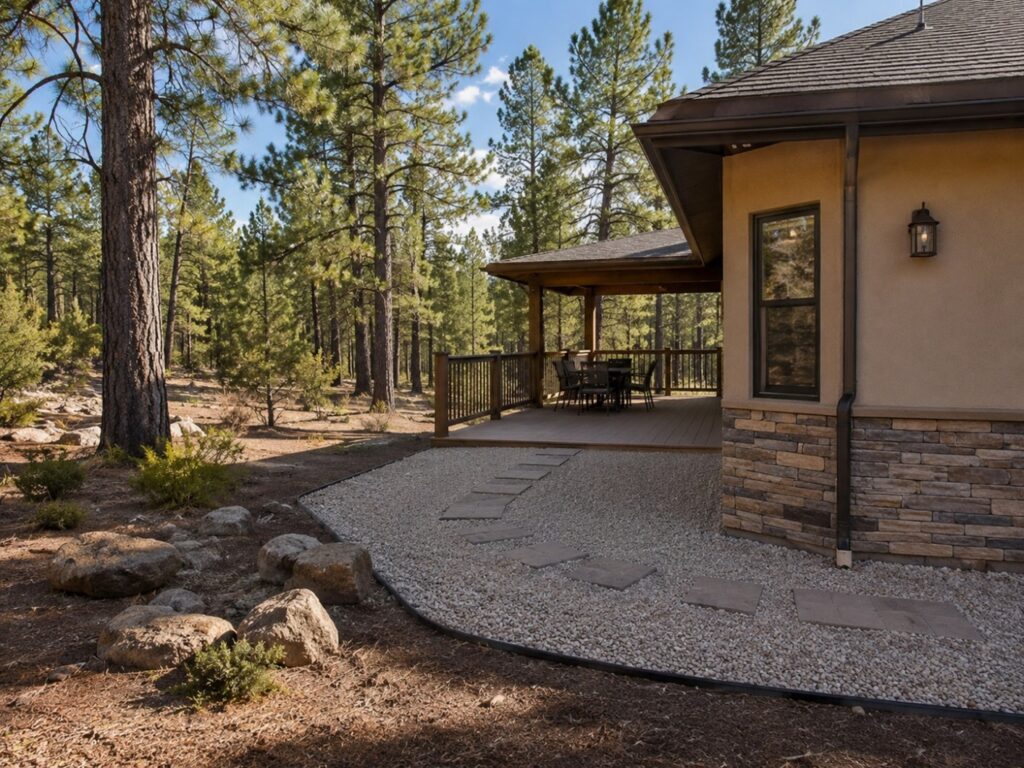
Wood mulch against siding, pine needles along the foundation, dry leaves under a deck, combustible furniture next to the wall, firewood stacked near the home, and wood fencing attached directly to the structure can all become ignition pathways.
Improving this area does not necessarily require a major remodel. Gravel, pavers, concrete, bare mineral soil, and clean noncombustible surfaces can help interrupt the path from ember to structure. Removing combustible material from the first few feet around the home is one of the most practical starting points for many property owners.
Defensible space is essential, but wildfire readiness is not only about trees and brush. Home hardening focuses on the building itself.
Common areas of concern include:
Some improvements are low-cost maintenance items. Cleaning roofs and gutters, clearing debris, moving wood piles, trimming branches back from roofs and chimneys, and sealing obvious gaps can all make a difference.
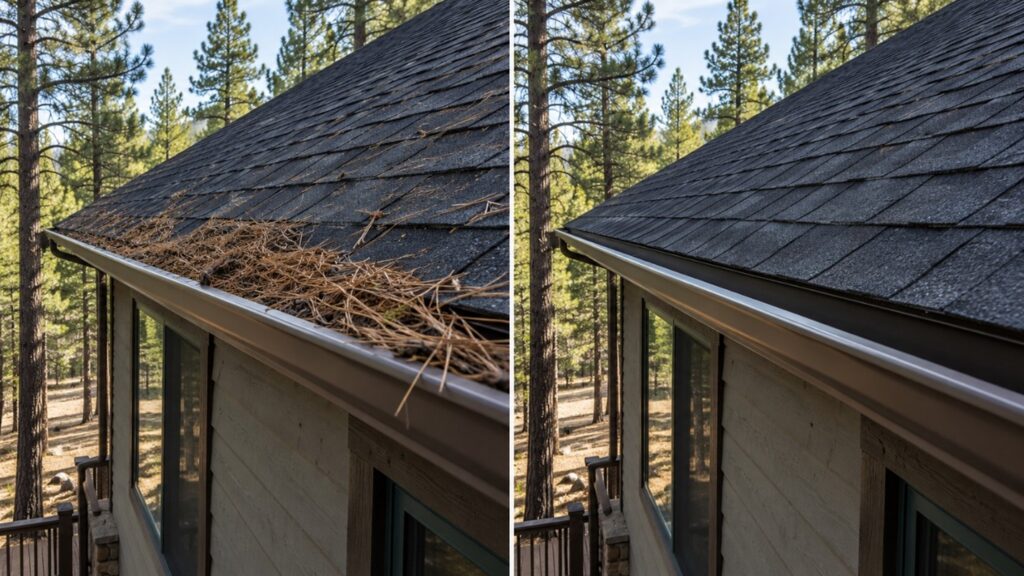
Routine maintenance, including roof and gutter cleaning, can reduce common ember ignition points.
Other improvements may be phased in over time: ember-resistant vents, gutter covers, tempered or multi-pane windows, Class A roofing, improved siding, boxed eaves, or changes to decks and fence connections.
The key is to treat wildfire readiness as a phased resilience plan, not an all-or-nothing project.
Our role is not to inspect, certify, or guarantee that a property is fire safe or insurable. Our role is to help clients ask better questions, gather better documentation, and connect with qualified professionals.
From a broker-risk standpoint, the safest practice is to avoid conclusions and focus on documentation, referrals, and observable facts.
This season, CAAR members can help by encouraging sellers to gather receipts, photos, inspection notes, and records of mitigation work before listing. Members can encourage buyers to ask separate questions about defensible space and structure-level hardening. Members can also remind clients to speak early with insurance professionals, especially when purchasing in forested or higher-risk areas.
Specific facts are more useful than broad assurances. Instead of saying a property is “fire safe,” “fireproof,” or “guaranteed insurable,” members should focus on what can be observed, documented, or verified by the appropriate professional.
Avoid: “This home is fire safe.”
Better: “The seller has provided documentation of recent defensible-space work and roof and gutter cleaning.”
Avoid: “This house has been fireproofed.”
Better: “The seller reports certain fire-hardening improvements, including updated vents and defensible-space work. Buyers should verify the condition and significance of those improvements with qualified professionals.”
Avoid: “Insurance should not be a problem.”
Better: “Please check insurance availability and cost early in your inspection period.”
Avoid: “The neighborhood is Firewise, so the house is protected.”
Better: “Firewise participation is a positive community effort, but buyers should still evaluate the individual structure, including the roof, gutters, vents, decks, fencing, eaves, and the first five feet around the home.”
Avoid: “There is nothing to worry about.”
Better: “Wildfire preparedness is an important ownership issue in Rim Country, and buyers should review the property carefully with the appropriate professionals.”
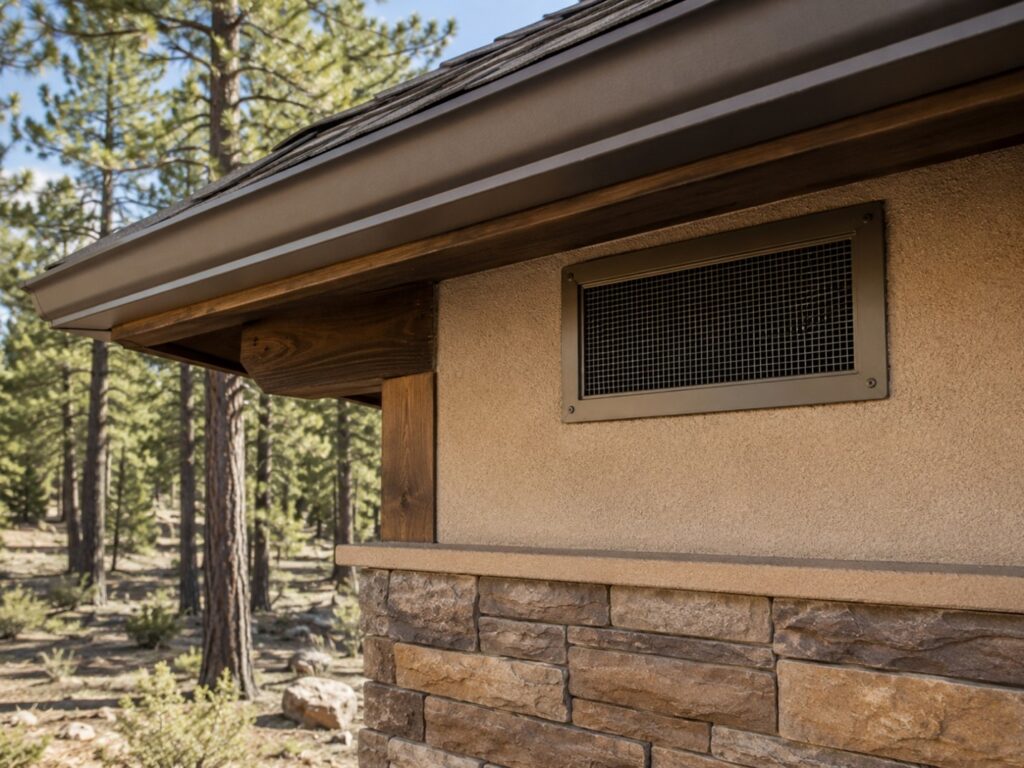
Home hardening includes structural details such as vents, eaves, gutters, windows, decks, and exterior gaps.
🏡 Seller Checklist | 🔎 Buyer Checklist |
Before listing a Rim Country property, sellers may want to gather or document: | When evaluating a Rim Country property, buyers may want to ask:
|
Recent roof and gutter cleaning. | Is the neighborhood involved in Firewise or other mitigation efforts? |
Photos of the first five feet around the home. | What does the first five feet around the structure look like? |
Receipts for tree trimming, brush removal, or defensible-space work. | Are the roof, gutters, vents, decks, fences, eaves, and garage doors potential ember pathways? |
Information about roof type, vents, windows, decks, siding, fencing, or exterior upgrades. | Has the seller documented any wildfire mitigation or home-hardening work? |
Any fire department inspection notes, Firewise participation, HOA mitigation information, or neighborhood cleanup efforts. | Have I discussed insurance availability and cost early in the process? |
These are practical ownership questions, not alarmist questions. Good documentation gives buyers, inspectors, insurers, and agents something concrete to evaluate.
Here is a simple way members can explain the issue:
“A Firewise neighborhood is a strong positive, but it does not automatically mean every individual home has been hardened. You will still want to look at the roof, gutters, vents, deck, fencing, eaves, and the first five feet around the structure. Firewise helps organize the neighborhood. Fire hardening helps protect the house.”
That type of language is clear, accurate, and useful
A clean yard helps, but a vulnerable house can still ignite.
For sellers, documentation can be valuable. A seller who can show recent roof and gutter cleaning, photos of a clean perimeter, receipts for defensible-space work, vent upgrades, window improvements, inspection notes, or Firewise participation is better positioned than a seller who simply says, “We have never had a problem.”
That does not mean fire hardening guarantees insurance coverage. It does not. Insurance underwriting remains a separate process.
But documentation can help create a better conversation. It can help buyers understand what has been done. It can help agents avoid vague claims. It can help brokers maintain more accurate files. And it can support confidence in a market where wildfire and insurance concerns are becoming more common.
One practical step every office can take is to invite a local fire official, insurance professional, inspector, or mitigation specialist to an office meeting before fire season. Another is to share credible fire-hardening and defensible-space resources with clients before the issue becomes urgent.
CAAR members can also support community cleanup efforts, encourage ReadyGila alert registration, and remind property owners that wildfire readiness is an ongoing responsibility, not a one-time project.
This is the kind of local knowledge that makes REALTORS® valuable.
Wildfire preparedness is not about fear. It is about responsibility, education, and long-term stewardship.
As your CAAR President, I believe we should make wildfire readiness part of our professional conversation. Not as alarmists, and not as inspectors, but as trusted local advisors who understand that protecting homeownership in Rim Country includes protecting the homes themselves.
When we help clients understand wildfire preparedness accurately and responsibly, we support safer communities, stronger transactions, and long-term confidence in Rim Country homeownership.
Firewise organizes the neighborhood. Fire hardening protects the house. Rim Country needs both.
Firewise is a community commitment. Fire hardening is a structure commitment. Rim Country needs both
Interested in what CAAR does and how you can get involved? Contact us below to talk to our team.