When Sellers Have Second Thoughts


By Dennis R. Riccio, President, Central Arizona Association of Realtors

On May 6, CAAR members will have a rare opportunity to hear directly from two people who help carry the REALTOR® voice to the Arizona Capitol. Tim Beaubien and Matthew Deike of Arizona REALTORS® will join us at our Business Breakfast at The Golf Club Chaparral Pines to discuss the legislative, political, and grassroots advocacy issues that affect our profession, our clients, and private property owners across Arizona.
This is not just a meeting about politics. It is a conversation about property rights, housing affordability, insurance, water, taxes, rental housing, short-term rentals, and the ability of REALTORS® to serve their clients in a changing market.
The breakfast begins at 8:30 a.m., and the meeting will start at 9:00 a.m. We are expecting a strong turnout, including members who may not have attended a CAAR event recently and others who may not be very familiar with RAPAC or the role of REALTOR® advocacy. That makes this meeting especially important.
As CAAR President, I believe one of our responsibilities is to help members understand not only what is happening in the market, but also what is happening around the market. The laws, taxes, rules, and policies surrounding real estate can either support our work or make it harder. Advocacy is how REALTORS® stay engaged before those decisions are made.
For many REALTORS®, the words “advocacy,” “lobbying,” and “RAPAC” can feel distant from the daily work of listing homes, showing property, negotiating contracts, managing transactions, and serving clients. But those efforts are one of the most important benefits of belonging to an organized REALTOR® association. They are also one of the clearest examples of how our industry works together to protect property rights, homeownership, and the ability of REALTORS® to do business.
When people hear the word “lobbying,” they may think of politics in the negative sense. In the REALTOR® world, advocacy is something much more practical and much more important.
Advocacy is the work of making sure lawmakers, regulators, and public officials understand how proposed laws and policies will affect real people in real communities. It is how we bring the experience of working REALTORS®, brokers, property managers, affiliates, homeowners, buyers, sellers, landlords, tenants, and private property owners into the rooms where decisions are made.
If you have ever wondered why REALTOR® advocacy matters to your business, consider this: nearly every transaction we handle is affected by public policy. Taxes, insurance rules, water policy, zoning, rental regulations, disclosure requirements, contract rules, and licensing laws all influence whether a transaction is affordable, predictable, and workable. Advocacy is how REALTORS® help shape those rules before they become problems for our clients.
A bill introduced at the Capitol can affect almost every part of our work. It can influence transaction costs, housing supply, land use, water policy, insurance availability, short-term rentals, property management, licensing, contracts, disclosures, and private property rights. A local ordinance can make it easier or harder to build housing, operate a rental property, protect neighborhoods, or complete a transaction efficiently. A regulatory change can create clarity, or it can create confusion and liability.
That is why REALTOR® advocacy is not just about REALTORS®. It is about the entire real estate ecosystem.
It helps working agents and brokers because unnecessary regulation can slow transactions, increase risk, and make it harder to serve clients. It helps consumers because taxes, insurance costs, and housing supply issues directly affect affordability. It helps homeowners because private property rights are only meaningful if they are defended when policy decisions are made. It helps landlords and property managers because state and local rules can determine whether rental housing remains workable and available. It helps communities because a healthy real estate market supports local businesses, schools, jobs, investment, and long-term stability.
In Central Arizona, these issues are not theoretical. Our members see them in conversations about wildfire risk, insurance availability, water, rural housing supply, second homes, short-term rentals, property management, and affordability for working families. A decision made at the Legislature may begin in Phoenix, but its effects are felt in Payson, throughout Rim Country, and in the communities where our members live and work.

Arizona REALTORS®’ Legislative and Political Affairs work exists to make sure the REALTOR® voice is heard at every level of government. That includes monitoring legislation, lobbying on behalf of members and property owners, organizing calls for action, supporting issues campaigns, conducting research, educating members, assisting local associations, and helping REALTORS® build relationships with elected officials.
The research materials prepared for this article describe Arizona REALTORS®’ advocacy program as focused on protecting private property rights, promoting REALTOR® interests, and mobilizing members through tools such as legislative monitoring, lobbying, calls for action, issues campaigns, member awareness, political training, RAPAC, and Issues Mobilization funds.
That is a broad mission, and it requires people who understand both policy and the practical realities of our profession. That is why we are fortunate to welcome Tim Beaubien and Matthew Deike to CAAR.
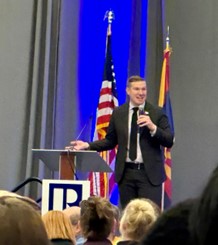
Tim Beaubien serves as Senior Director of Government Affairs for Arizona REALTORS®. According to the research materials, his responsibilities include the REALTOR® Party, RAPAC fundraising, campaigns, grant management, and local association advocacy support. Arizona REALTORS® previously announced that Tim joined the organization after serving as Government Affairs Director for the Santa Clara County Association of REALTORS®, giving him valuable experience in association advocacy and local government affairs. He has been described as a main point of contact for REALTOR® Party work, RAPAC, Issues Mobilization, fundraising, grants, campaigns, events, and local association support.
Matthew Deike serves as REALTOR® Party Manager for Arizona REALTORS®. The research materials identify his responsibilities as including RAPAC donor relations and fundraising strategy, major donor recognition and retention, REALTOR® Party grant application assistance, and RAPAC account receivables. Arizona REALTORS®’ 2026 speakers list places Matt alongside Tim for political and legislative updates and RAPAC fundraising, making him an ideal speaker to help explain how advocacy resources are built and used.

Together, Tim and Matt can help answer a question every member should understand: what does advocacy actually do for us?
Before looking at examples, it is worth talking plainly about RAPAC.
RAPAC is often misunderstood. It is easy to hear the term and assume it means partisan politics. It does not. RAPAC is voluntary, it is not funded by member dues, and its purpose is to support candidates and policies that understand real estate, private property rights, homeownership, free markets, and reasonable regulation.
Arizona REALTORS® describes RAPAC as a voluntary, nonprofit political action committee that is independent of any political party. Its focus is supporting candidates and policies that understand and support free markets, private property rights, smart regulation, homeownership, and the real estate profession. Nationally, RPAC is also funded by voluntary contributions, not dues, and is designed to support candidates who understand REALTOR® issues.
That does not mean every REALTOR® will agree with every political decision. It does mean our profession has a way to participate in the process instead of standing on the sidelines while others make decisions that affect our clients and our businesses.
That distinction matters. RAPAC is not about party labels. It is about whether policymakers understand the real-world effects of the decisions they make.
Do they understand housing supply? Do they understand what new taxes do to affordability? Do they understand the difference between targeted regulation and overreach? Do they understand that private property rights are foundational to both individual opportunity and local economic health?
Relationships matter in public policy. So does timing. If REALTORS® are not involved until after a harmful bill is moving forward, it may be too late. RAPAC, grassroots advocacy, Issues Mobilization, calls for action, local association involvement, and direct member engagement all help ensure the REALTOR® voice is present early and effectively.
Put simply, advocacy is not politics for politics’ sake. It is how REALTORS® make sure property owners and real estate professionals have a voice before decisions are made.
The most effective way to explain the value of advocacy is with results.
We have seen advocacy at work in practical ways.
2018 | Proposition 126 helped protect real estate services from new or increased transaction-based taxes on services. For REALTORS®, that means helping protect commissions and real estate services from new service taxes. For consumers, it means helping prevent added costs from being placed on already expensive real estate transactions. |
Long-running protection | Real estate transfer tax protections help keep additional costs away from the closing table. Preventing new transfer taxes protects buyers and sellers from another government-imposed cost when property changes hands. |
2020 | Essential-service recognition and remote online notarization helped keep real estate moving during COVID-19. Advocacy helped protect the functioning of the housing market during a period of major disruption and uncertainty. |
2025 | Residential rental tax repeal removed a cost and simplified compliance for long-term residential rentals. For renters, landlords, and property managers, this was a practical example of advocacy improving housing affordability and reducing administrative burden. |
Current issues | Water, housing supply, insurance, short-term rentals, landlord-tenant issues, construction defects, planning, permitting, and homeownership opportunity remain active advocacy priorities. Some are completed wins, while others are ongoing issues where REALTORS® need to stay involved. |
Those examples all point to the same lesson: advocacy works best when REALTORS® are involved early, consistently, and professionally.
Short-term rentals, insurance, landlord-tenant issues, planning and permitting, water, construction defects, and homeownership opportunity are all part of the current conversation. Some of those issues are completed legislative wins. Others are active advocacy priorities. All of them show why REALTORS® need to be at the table before decisions are made.
Insurance is especially timely for our market. Members across Arizona are seeing concerns about availability, affordability, and underwriting. The research materials note that Arizona REALTORS®’ RAPAC messaging now lists keeping home insurance affordable and attainable among the issues members care about. They also note that Arizona’s homeowners insurance system operates under a “use and file” framework, which limits direct state control over pricing. That makes the issue complicated, but it also makes it timely and important.
At its core, REALTOR® advocacy helps protect:
🏠 Private property rights
📈 Housing affordability
📄 Transaction efficiency
⚖️ Fair and workable regulation
🤝 REALTOR® ability to serve clients
🔑 Homeownership and property investment
🌄 Local communities and economic opportunity
Those are not partisan goals. They are REALTOR® goals. They are community goals. And they are directly connected to the work CAAR members do every day.
Many CAAR members care deeply about property rights, housing affordability, and the future of our communities. But we do not always get to see how those values are defended in committee rooms, agency meetings, legislative negotiations, ballot campaigns, and local government discussions.
We do not always see the work that happens quietly before a bill is amended, stopped, improved, or passed. We do not always connect a smoother transaction, a lower tax burden, or a protected property right to the advocacy work that helped make it possible.
Tim Beaubien and Matthew Deike are coming to Payson to help make that connection clear.
This breakfast is an opportunity to better understand what is happening at the Capitol and how it affects our members here in Central Arizona. It is also an opportunity to ask questions about the issues we are seeing in our own market: insurance, water, housing supply, short-term rentals, rental housing, rural communities, and the future of private property rights.
My hope is that every member who attends will come ready to listen, learn, and participate. Ask how RAPAC works. Ask what it does and what it does not do. Ask about insurance. Ask about housing supply. Ask about water. Ask about short-term rentals. Ask how local members can be more effective advocates when issues arise in our own communities.
Our association is strongest when our members are informed and engaged. Advocacy is not someone else’s job. It is part of our shared responsibility as REALTORS®. We are not only professionals who help people buy and sell property. We are also stewards of private property rights, homeownership, and the communities we serve.
Strong local associations matter. Strong state advocacy matters. And when REALTORS® speak together with knowledge, professionalism, and purpose, we can make a real difference.
I encourage every CAAR member to attend, bring questions, and leave with a clearer understanding of how advocacy protects your clients and your business. This breakfast is a chance to learn more about the work being done on our behalf and about how each of us can play a role in protecting property rights and strengthening the real estate profession.
I look forward to seeing you at the CAAR Business Breakfast and to welcoming Tim Beaubien and Matthew Deike for what should be a timely, practical, and important conversation for every REALTOR® in Central Arizona.
Come ready to listen, learn, and ask questions about advocacy, RAPAC, insurance, water, housing supply, and private property rights.
Interested in what CAAR does and how you can get involved? Contact us below to talk to our team.