Pricing Discipline in a More Selective Market

What price reductions, longer market times and growing inventory mean for Rim Country practitioners
By Dennis Riccio, 2026 President | Central Arizona Association of REALTORS®
843 ROLLING 12-MONTH SALES | $435K MEDIAN SALE PRICE | 55% ACTIVE LISTINGS REDUCED | 7.7 MONTHS OF INVENTORY |
Rim Country’s market is active—but buyers are increasingly selective about price, condition and value.
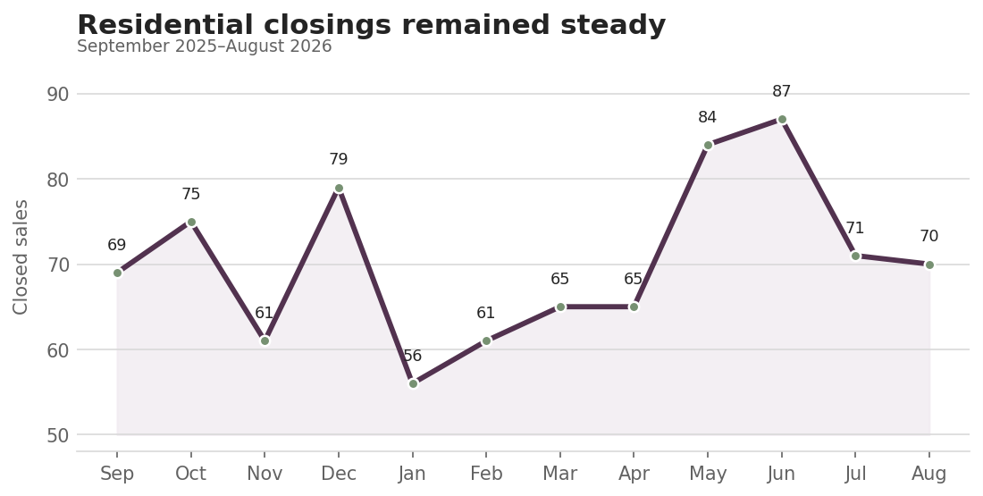
Rim Country recorded 70 residential closings in August, nearly matching July’s 71. Across the rolling 12 months ending August 31, the market produced 843 closings and approximately $434.7 million in sales volume. The median sale price was $435,000, only modestly below the $437,000 median in the previous reporting period.
That stability matters. This is not a market without transactions. It is a market in which pricing, preparation and execution have become more consequential. Buyers are participating, but they have more alternatives and more time to compare them.
PRACTITIONER TAKEAWAY Stable closing volume does not eliminate the need for sharper pricing. It makes the difference between well-positioned and aspirational listings easier to see. |
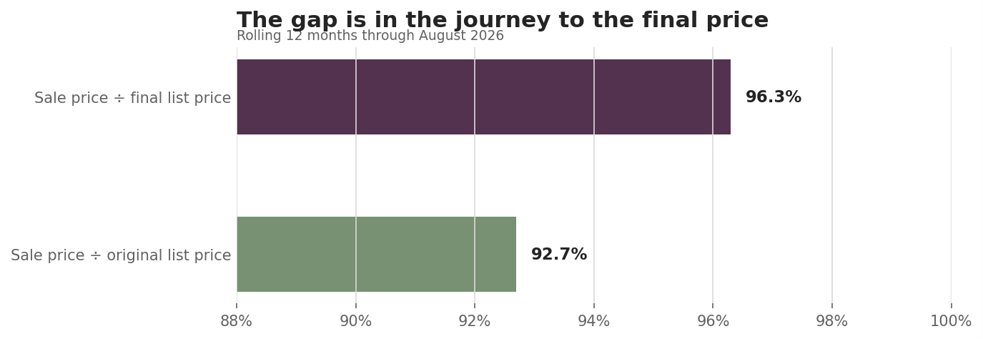
The rolling sale-price-to-final-list-price ratio was approximately 96.3%. That figure shows that, once a property reached its final asking price, buyers and sellers generally negotiated within a manageable range.
The sale-price-to-original-list-price ratio tells a different story: approximately 92.7% over the rolling year, and 91.6% for August alone. The difference is not simply negotiation at the closing table. It reflects the cumulative effect of price reductions before a contract is secured.
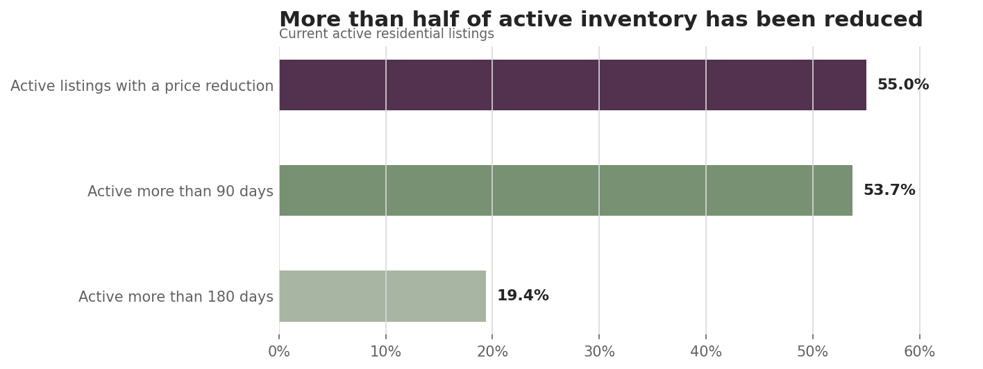
Among the 540 active residential listings in the snapshot, 297 had already recorded a price reduction—about 55% of active inventory. The median cumulative reduction was roughly $25,000, or 5.3% of the original asking price.
PRACTITIONER TAKEAWAY The strongest pricing conversation often happens before launch. A listing that starts near the market can preserve early attention, reduce carrying time and negotiate from a stronger position. |
The rolling average days on market was approximately 120 days, while the median was 92 days. Within current active inventory, 53.7% of listings had been available for more than 90 days and 19.4% had been active for more than 180 days.
Time alone does not make a property unsalable. Some Rim Country homes have limited buyer pools because of location, condition, access, acreage or price. But prolonged exposure can change the way buyers interpret a listing. Questions about condition and seller motivation become part of the negotiation before an offer is ever written.
For practitioners, the useful response is not automatic discounting. It is a documented review of showing activity, online engagement, competing inventory, condition feedback and recent contracts—followed by a clear recommendation.
Overall inventory was approximately 7.7 months based on 540 active listings and 70 August closings. The supply picture changes substantially by price range, however. Entry and mid-market segments were closer to six months, while inventory expanded above $750,000 and reached 14.6 months at $1 million and above.
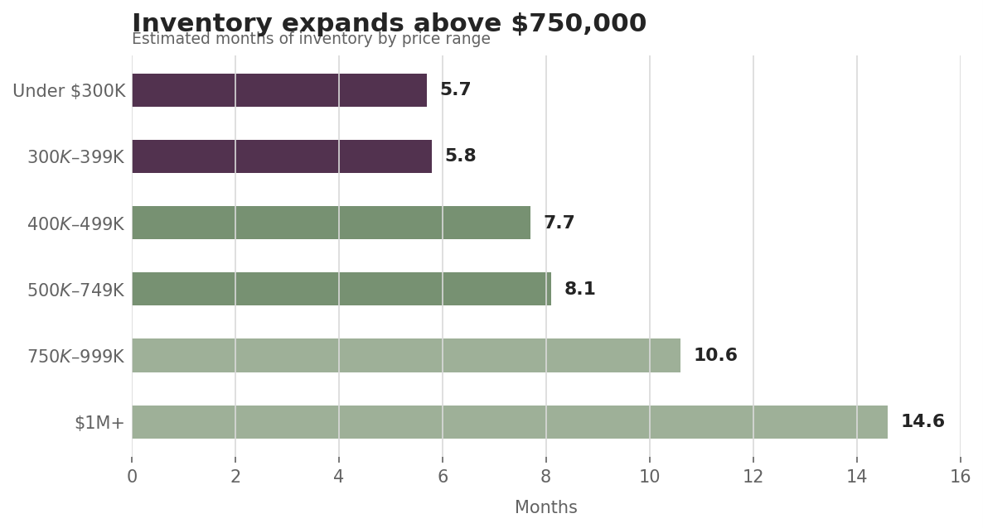
This is why a broad market label can mislead. A well-prepared home under $400,000 is competing in a different environment from a luxury property, a remote cabin or a highly customized acreage home. Geography matters too: Payson, Pine, Strawberry, Star Valley, Happy Jack, Christopher Creek, Tonto Basin and the Control Road communities do not move in lockstep.
PRACTITIONER TAKEAWAY Pricing advice should be built from the property’s real competitive set—not from a single regional median or a headline inventory number. |
In a more selective market, the listing presentation must do more than establish a hopeful range. It should establish a decision framework the seller can use after launch.
More inventory creates leverage, but not every long-market-time listing is equally negotiable. Strong buyer representation begins with diagnosing the listing—not simply counting its days on market.

Rim Country’s setting attracts buyers, but each community, property type and price band requires its own market analysis.
This market rewards consistent process. Brokers can help agents by standardizing how pricing recommendations are documented, how price-reduction conversations are prepared and how listing performance is reviewed. The goal is not to force every seller into the same strategy. It is to make sure recommendations are evidence-based, repeatable and clearly communicated.
Brokerages can also use these conditions as a coaching opportunity: audit the competitive set, role-play the second pricing conversation and examine the gap between original and final list price. Those habits improve service now and remain valuable when the market changes again.
Rim Country’s residential market remains active, but it has become less forgiving of avoidable pricing and positioning errors. The median price is broadly stable. Closings continue. Yet reductions, longer market times and expanding upper-tier inventory show that buyers are exercising choice.
For REALTORS® and brokers, the opportunity is straightforward: replace broad market assumptions with precise local evidence, set expectations early and create a disciplined review process after launch. In this environment, preparation is not merely a marketing advantage. It is a core part of client representation.
DENNIS RICCIO 2026 President, Central Arizona Association of REALTORS® Writing for CAAR members about market interpretation, professional practice and the local conditions shaping client service across Rim Country. |
DATA SCOPE Central Arizona MLS and Flexmls residential activity through Aug. 31, 2026. All residential subtypes are included. Heber/Overgaard and legacy North/South/East/West areas are excluded. Inventory estimates are directional and depend on the closing-period denominator used.
Interested in what CAAR does and how you can get involved? Contact us below to talk to our team.